Minecraft Wool Stairs & Slabs: Recipe, All 16 Colors & Sculk Uses
Wool
By GamerCubic Editorial Team
Last checked: September 20, 2026
Version checked: Minecraft Java Edition 26.3 / Bedrock Edition 26.50 — Wilderness Bound
Building Guides path: Use this article when your build needs soft furniture, colored seating, carpeted stairs, or vibration-dampening shapes. For complete house footprints and material budgets, open the Minecraft house designs guide; for the full topic map, visit the Minecraft Building Guides hub.
Minecraft now has Wool Stairs and Wool Slabs in all 16 wool colors. To craft Wool Stairs, place six matching Wool blocks in the standard stair pattern to get four stairs; for Wool Slabs, place three matching Wool blocks in one horizontal row to get six slabs. These new shapes are not only decorative: they retain wool’s ability to dampen vibrations, making them useful around Sculk Sensors and in Deep Dark builds. Wool Slabs are also the crafting material used for Minecraft’s new Cushions.
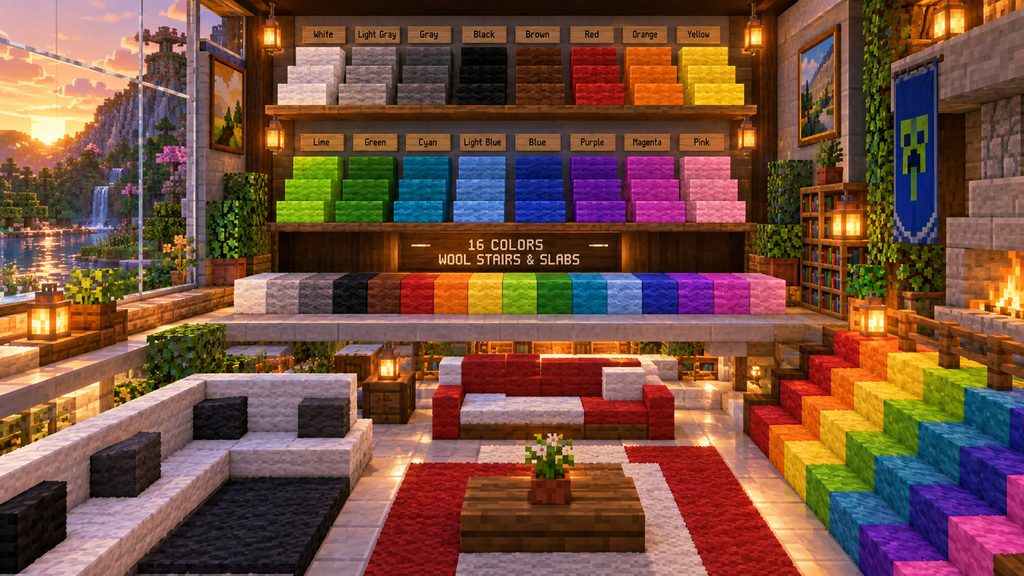
Quick Takeaway: Six matching Wool blocks make four Wool Stairs, while three matching Wool blocks make six Wool Slabs. Both come in all 16 colors and retain wool’s vibration-dampening behavior. ✅
Quick Answer
Wool Stairs and Wool Slabs were added in Minecraft Java 26.3 and Bedrock 26.50 as part of the Wilderness Bound drop. Every normal Wool color now has matching stair and slab variants. They use the familiar stair and slab crafting layouts, work as shaped building blocks, dampen vibrations like Wool blocks, and Wool Slabs can be used to craft Cushions.
| Feature | Wool Stairs | Wool Slabs |
|---|---|---|
| Recipe | 6 matching Wool | 3 matching Wool |
| Output | 4 Stairs | 6 Slabs |
| Colors | 16 | 16 |
| Dampens vibrations | Yes | Yes |
| Cushion ingredient | No | Yes |
What Are Wool Stairs and Wool Slabs?
Wool Stairs and Wool Slabs are shaped versions of Minecraft’s normal Wool blocks. They were added with the Wilderness Bound update so builders no longer have to switch to wood, quartz, concrete, or another material every time they need a half-height surface or staircase inside a wool-based build.
A Wool Stair behaves as a normal stair shape. It can face different directions, be placed upside down, and connect with nearby stairs to create inner and outer corners.
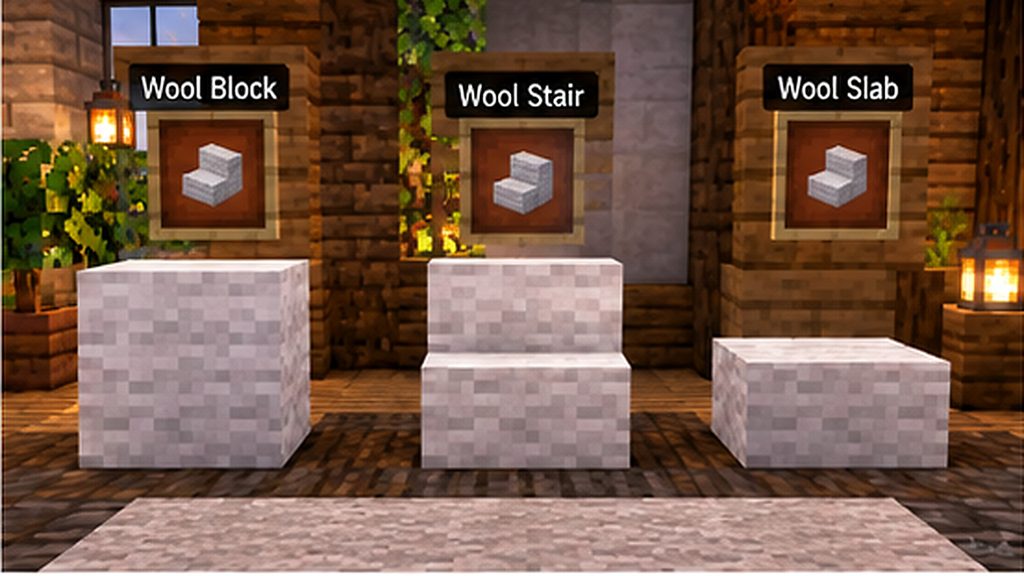
A Wool Slab occupies half the height of a normal block. You can place it as a bottom slab, top slab, or combine two matching slabs into a full-height shape.
The important difference is the material.
These blocks still belong to Minecraft’s wool family, which means they keep the soft, woven appearance of ordinary Wool rather than looking like stone or wood.
That makes them especially useful for:
- sofas and armchairs
- theater seating
- carpeted staircases
- tent builds
- bed frames
- padded walls
- colorful platforms
- stage designs
- children’s rooms
- fantasy interiors
- Sculk-related builds
Before 26.3, builders often had to use mismatched stairs beside Wool blocks. That limitation is now gone.
How to Craft Wool Stairs and Wool Slabs
The crafting recipes use the same basic patterns Minecraft players already know from other stair and slab families.
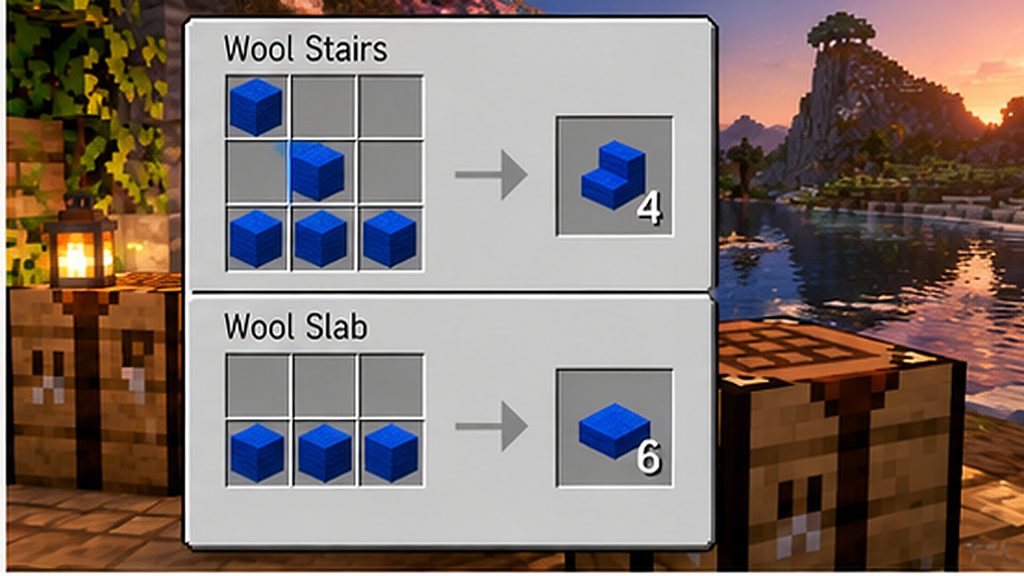
Wool Stairs Recipe
You need:
6 Wool blocks of the same color
Arrange them in the crafting table in a staircase pattern:
- Top row: one Wool block
- Middle row: two Wool blocks
- Bottom row: three Wool blocks
This produces:
4 matching Wool Stairs
For example, six Red Wool blocks produce Red Wool Stairs.
Six Cyan Wool blocks produce Cyan Wool Stairs.
Do not mix colors in the recipe if you want a matching colored result.
Wool Slab Recipe
You need:
3 Wool blocks of the same color
Place the three Wool blocks in one horizontal row.
This produces:
6 matching Wool Slabs
You can use the top, middle, or bottom row of the crafting grid.
Which recipe is more material-efficient?
Slabs give you much more usable surface from your Wool.
Three Wool blocks become six slabs, effectively giving you twice as many half-block pieces.
Stairs are more expensive: six Wool blocks produce four stairs.
For large survival builds, calculate how many stairs you need before converting an entire sheep farm’s Wool supply.
GamerCubic Tip: Dye the Wool first, then craft the matching stairs or slabs. Keep several stacks of ordinary Wool uncrafted until you know how many stairs and slabs the finished build actually needs.
All 16 Wool Stair and Slab Colors
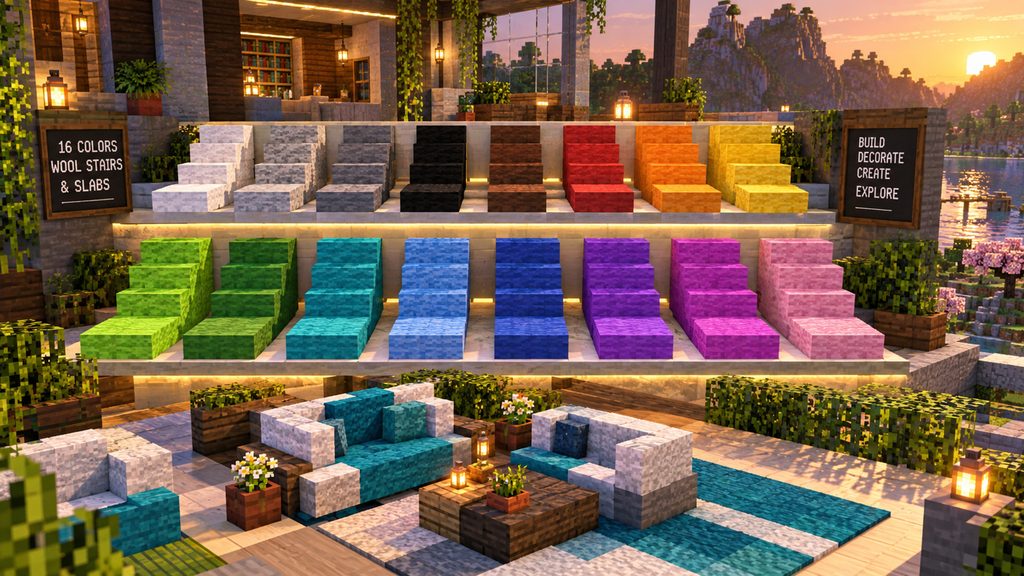
Minecraft gives Wool Stairs and Slabs the complete standard Wool palette.
The 16 colors are:
| Color | Wool Stair | Wool Slab |
|---|---|---|
| White | Yes | Yes |
| Light Gray | Yes | Yes |
| Gray | Yes | Yes |
| Black | Yes | Yes |
| Brown | Yes | Yes |
| Red | Yes | Yes |
| Orange | Yes | Yes |
| Yellow | Yes | Yes |
| Lime | Yes | Yes |
| Green | Yes | Yes |
| Cyan | Yes | Yes |
| Light Blue | Yes | Yes |
| Blue | Yes | Yes |
| Purple | Yes | Yes |
| Magenta | Yes | Yes |
| Pink | Yes | Yes |
That gives builders 32 new shaped Wool blocks in total: 16 stair variants and 16 slab variants.
Neutral colors such as White, Light Gray, Gray and Black fit modern interiors particularly well.
Brown, Red, Orange and Yellow work naturally in warm cabins, libraries, theaters and autumn-themed builds.
Green and Lime are useful for fantasy builds or colorful furniture.
Cyan, Light Blue and Blue fit aquatic bases, futuristic interiors and bedroom designs.
Purple, Magenta and Pink work especially well in magical builds, gaming rooms and colorful towns.
You also do not need to commit an entire building to one color. Combining two or three related shades can create much better results.
For example:
Dark sofa: Black + Gray
Ocean lounge: Cyan + Light Blue + Blue
Autumn interior: Red + Orange + Yellow
Fantasy room: Purple + Magenta + Pink
The biggest improvement is that these combinations can now continue through full blocks, stairs, slabs, carpets and Cushions without suddenly changing to another material family.
How Wool Stairs and Slabs Dampen Sculk Vibrations
The most important non-building feature of Wool Stairs and Slabs is that they retain wool’s vibration-dampening property.
Mojang specifically placed both new block families into Minecraft’s vibration-dampening system.
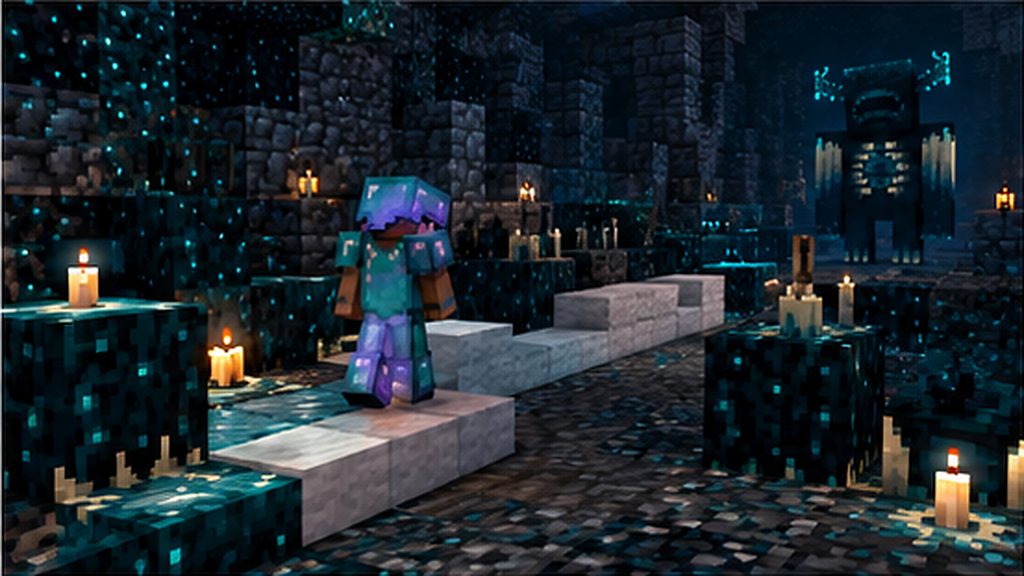
That matters around:
- Sculk Sensors
- Calibrated Sculk Sensors
- Sculk Shriekers
- Deep Dark bases
- Ancient City paths
- vibration-based Redstone systems
Wool has a special interaction with Sculk because it can block or dampen vibration signals when placed correctly between the vibration source and the sensor.
Before Wool Stairs and Slabs existed, players were mostly limited to full Wool blocks and Carpet when designing around this mechanic.
Now you can create shaped architecture that also participates in vibration control.
Possible uses include:
- stairways inside Deep Dark outposts
- half-height platforms beside Sculk
- decorative barriers around Sensors
- stepped pathways
- low walls
- technical Redstone rooms
- Ancient City shelters
However, do not assume that simply placing one Wool Stair somewhere nearby makes you invisible to every Sculk Sensor.
Placement still matters.
The Wool shape needs to be positioned so it actually interferes with the relevant vibration path or supports the silent design you are building.
Mojang’s earlier Sculk documentation explains this principle with full Wool blocks: placing wool between a vibration source and a sensor can prevent the sensor from detecting that vibration.
The new stair and slab variants expand the shapes available for that same general strategy.
GamerCubic Tip: If you are experimenting near an Ancient City, test your Wool Stair or Slab layout against a single Sculk Sensor in a safe Creative world before trusting it beside a naturally generated Shrieker.
Best Building Uses for Wool Stairs and Slabs
Wool Stairs and Slabs are particularly valuable because Minecraft builders have always used Wool to represent soft materials.
Wooden stairs can approximate a chair, but they still look wooden.
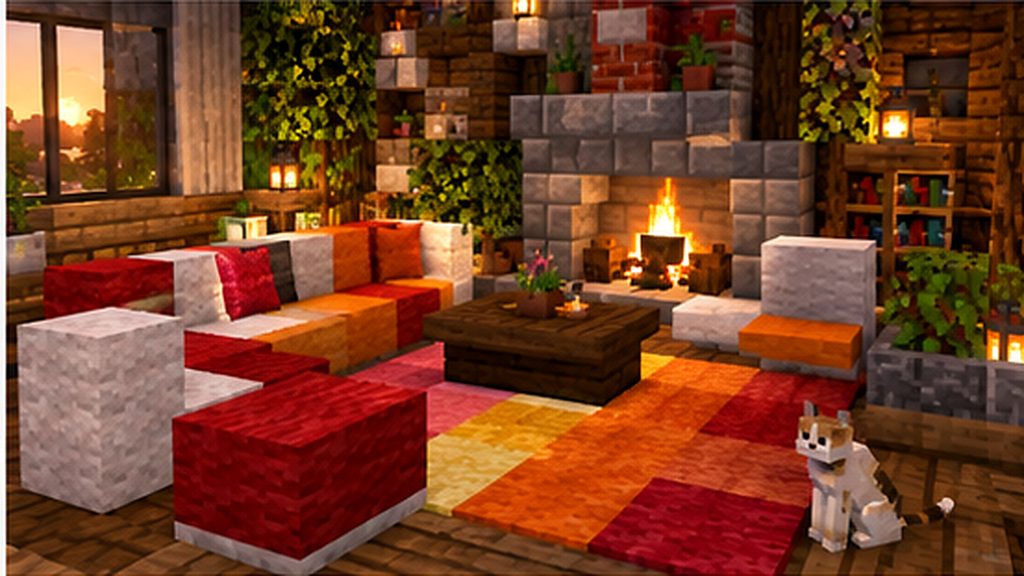
Quartz stairs can create modern furniture, but they look hard and polished.
Wool finally gives builders a stair shape that visually reads as upholstered or padded.
Sofas and Chairs
Use Wool Stairs as the seat and backrest.
Add:
- Wool Slabs for armrests
- trapdoors for side details
- Cushions for real seating
- carpets underneath
- signs or banners nearby for decoration
A three-seat sofa can be as simple as three Wool Stairs next to each other with small side arms.
Carpeted Staircases
A normal wooden staircase inside a luxury house can look strange when the rest of the room uses carpet and soft decoration.
Wool Stairs allow the staircase itself to look carpeted.
Use darker Wool on the edge and lighter Wool in the center to create a runner effect.
Theater and Stadium Seating
Because Wool Stairs exist in 16 colors, you can build entire seating sections with clear color coding.
For example:
- Red = VIP
- Blue = general seating
- Yellow = aisle markers
Tents
Wool is already commonly used for Minecraft tent walls.
Stairs and Slabs now let you shape the roof and edges without relying entirely on full cubes.
Shelves and Low Platforms
Wool Slabs are excellent for:
- low beds
- display stages
- nursery furniture
- padded benches
- layered floors
The shape is subtle but makes interiors much less blocky.
How Wool Slabs Are Used to Craft Cushions
Wool Slabs also have a second major purpose: they are used to craft Cushions.
Cushions were added in the same Wilderness Bound update and finally allow Minecraft players to sit on a dedicated vanilla furniture item.
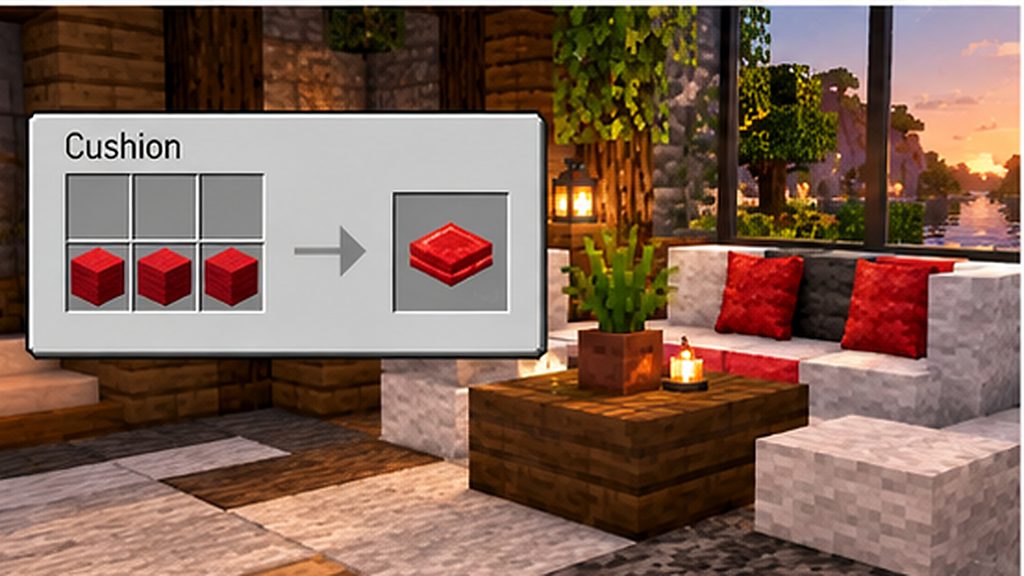
The recipe uses:
3 Wool Slabs of the same color
That means the two features were designed to work together.
For example, you can use:
- Blue Wool Stairs for a sofa frame
- Blue Wool Slabs for low armrests
- Blue Cushions as usable seats
This gives Minecraft furniture a much more consistent visual style than older chair tricks using minecarts, boats, trapdoors and unrelated stair materials.
Cushions come in the same 16-color family.
A useful survival workflow is:
- Collect Wool.
- Dye the Wool to your chosen color.
- Keep some full blocks.
- Craft some into Wool Stairs.
- Craft some into Wool Slabs.
- Reserve matching Slabs for Cushions.
- Build the furniture before crafting every remaining block.
This avoids wasting expensive dyed Wool.
Need a renewable supply before you craft? Use the sheep wool-regrowth guide to keep a small flock producing wool beside your build area.
If you are building a large theater, living room or multiplayer meeting area, calculate the Cushion count first because every Cushion uses Wool Slabs from the same supply you may need for floors and furniture.
Wool Stairs vs Concrete Stairs: Which Should You Use?
Wilderness Bound also added Concrete Stairs and Concrete Slabs, which creates an obvious question:
Should you build with Wool or Concrete?
The answer depends on what the block is supposed to represent.
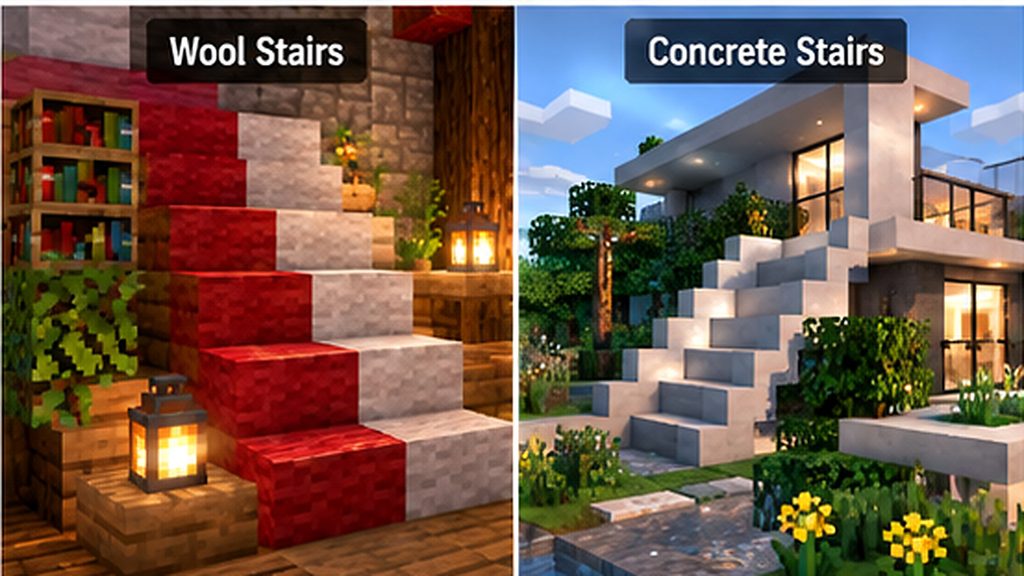
| Feature | Wool | Concrete |
|---|---|---|
| Texture | Soft / woven | Smooth / solid |
| 16 colors | Yes | Yes |
| Stairs | Yes | Yes |
| Slabs | Yes | Yes |
| Vibration dampening | Yes | No special wool behavior |
| Cushion ingredient | Wool Slabs | No |
| Best use | Interiors / furniture | Modern architecture |
| Fire risk | Wool is flammable | Better around heat |
Choose Wool when you want:
- sofas
- bedrooms
- theaters
- tents
- padded interiors
- quiet Sculk builds
- colorful stair runners
Choose Concrete when you want:
- modern houses
- roads
- industrial builds
- exterior staircases
- laboratories
- clean geometric structures
- areas near fire or lava
Concrete has a cleaner, flatter texture.
Wool looks softer and slightly more textured.
Neither is automatically better.
The biggest improvement in Minecraft 26.3 is that builders can finally choose between these materials because of appearance and function—not because only one material has the required shape.
Java vs Bedrock Wool Stairs and Slabs
Wool Stairs and Slabs are now available in both current stable editions associated with Wilderness Bound:
Java Edition: 26.3
Bedrock Edition: 26.50
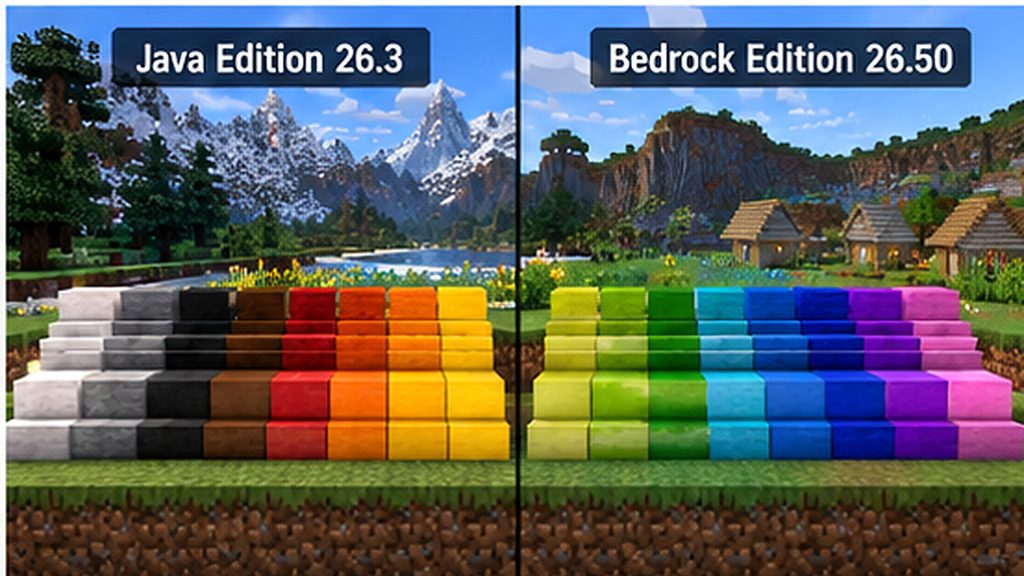
Both editions received Wool Stair and Wool Slab variants for all 16 Wool colors.
Both are intended to preserve Wool’s vibration-dampening behavior.
During Bedrock’s Preview cycle, Mojang also fixed several parity issues involving these blocks.
Those fixes included:
- Wool Stairs and Slabs no longer conducting Redstone signals incorrectly
- dropped Wool Stair and Slab items no longer generating vibrations in situations where full Wool would not
- Shears becoming the faster tool for breaking them, matching Wool behavior
- fixing an unintended interaction where they could be used in the Painting recipe
These fixes are useful reminders that older Preview videos or articles may describe behavior that changed before the final Bedrock release.
For Java players, the new blocks were introduced during the 26.3 Snapshot cycle and are now part of the full 26.3 release.
If you are following an older guide that still calls them “snapshot-only,” that information is outdated.
Why Can’t I Find Wool Stairs or Wool Slabs?
If Wool Stairs and Slabs are missing from your game, check the version first.
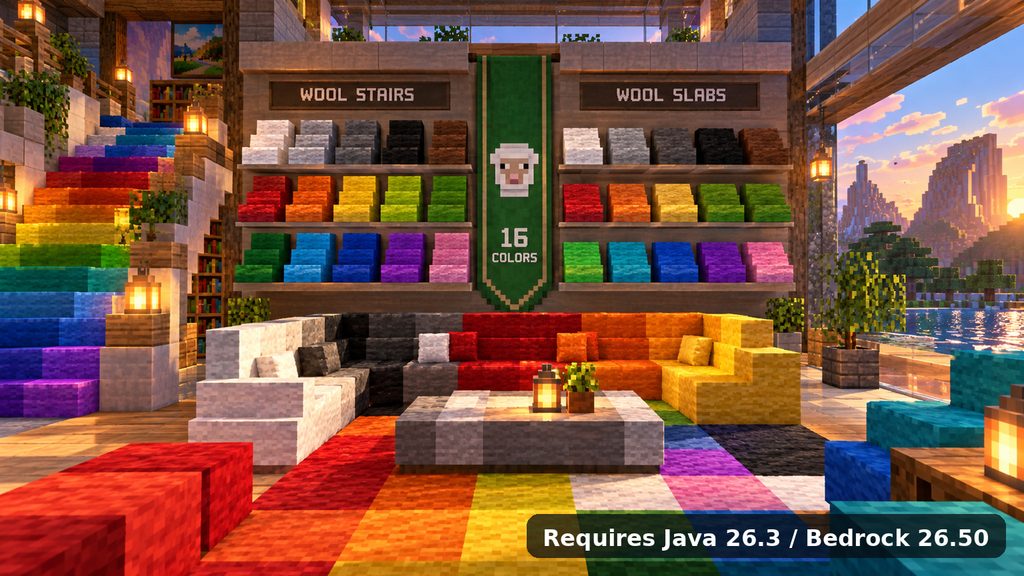
They were added with the Wilderness Bound release cycle.
You need:
- Java Edition 26.3 or newer, or
- Bedrock Edition 26.50 or newer
If you are playing an older Minecraft release, these blocks will not exist in normal vanilla gameplay.
Other common problems include:
The recipe does not appear
Make sure all Wool blocks are the same color and arranged in the correct stair or slab pattern.
I crafted slabs but can’t make a Cushion
Use three matching Wool Slabs.
If you are following an older snapshot tutorial, recheck the instructions because several Wilderness Bound mechanics changed during testing.
My Sculk setup still activates
Vibration dampening depends on placement.
Do not assume that one Wool Stair automatically silences an entire room. Check where the vibration source, Wool block and Sculk Sensor are positioned.
I am playing with mods
A modded recipe, datapack, older server version or custom resource may change how the item appears or behaves.
Test the recipe in an unmodified world if you are unsure whether the problem comes from vanilla Minecraft.
Frequently Asked Questions
How do you make Wool Stairs in Minecraft?
Use six Wool blocks of the same color in the standard stair-shaped crafting pattern. The recipe produces four matching Wool Stairs.
How do you make Wool Slabs?
Place three matching Wool blocks in one horizontal row of the crafting table. The recipe produces six Wool Slabs.
How many Wool Stair colors are there?
There are 16 Wool Stair colors and 16 Wool Slab colors, matching Minecraft’s full standard Wool palette.
Do Wool Stairs block Sculk vibrations?
Wool Stairs and Slabs participate in Minecraft’s Wool vibration-dampening system. Correctly positioned Wool can prevent vibration signals from reaching Sculk Sensors, but the layout and vibration path still matter.
Can Wool Slabs make Cushions?
Yes. Three Wool Slabs of the same color are used to craft a matching Cushion.
Final Recommendation
Wool Stairs and Wool Slabs are much more useful than a simple decorative block addition. They finally let builders continue the same Wool texture across full blocks, stairs, half-height surfaces and functional Cushions, while also retaining Wool’s valuable vibration-dampening behavior. Use Wool Stairs for furniture, carpeted steps and shaped Deep Dark builds; use Wool Slabs for low platforms, benches and Cushion crafting. If your build is exposed to fire or needs a harder modern texture, switch to Concrete Stairs and Slabs instead.
Explore More:
Minecraft Concrete Stairs and Slabs:
https://gamercubic.com/minecraft-concrete-stairs-and-slabs-recipe-all-16-colors-and-release-guide/
Minecraft Cushion Guide:
https://gamercubic.com/minecraft-cushion-guide-how-to-sit-craft-cushions-fix-placement-problems/
Minecraft Houses:
https://gamercubic.com/minecraft-houses-6-beautiful-designs-with-materials-and-building-steps/
Latest Version of Minecraft:
https://gamercubic.com/latest-version-of-minecraft-java-bedrock-and-26-2-update-explained/
Official sources
- Minecraft Java Edition 26.3 release notes — Mojang’s official Java changelog covering Wool Stairs, Wool Slabs, Cushions, recipes, tags, and technical changes.
- Minecraft Bedrock Edition 26.50: Wilderness Bound — the official Bedrock changelog for the 16 Wool Stair and Wool Slab variants and related features.
Continue Exploring
Minecraft 26.3 Mods Not Working? Fix Fabric, Forge & NeoForge
Fix Minecraft 26.3 mods that will not load on Fabric, Forge or NeoForge by checking Java 25, loader versions, dependencies, instance folders and logs.

Minecraft Vulkan vs OpenGL: Which Gives Better FPS? (26.4 Guide)
Compare Vulkan and OpenGL in Minecraft Java 26.4, test average FPS and 1% lows, troubleshoot stutter and choose the best renderer for your PC.

How to Find Ice Caves in Minecraft 26.4 (Location, Y-Level & New Features)
Find Ice Caves beneath colder Overworld biomes in Minecraft 26.4 test builds. This guide covers location clues, the unknown Y-level, Ice Crystals, Frostbites, and safe exploration.