Minecraft Cold Sulfur Cube Guide: Blue Ice & Frosted-Ice Trails (26.4)
Cold
By GamerCubic Editorial Team · Last checked: October 29, 2026 · Version checked: Java 26.4 Snapshot 6
Quick answer: The Cold Sulfur Cube is a buoyant sulfur-cube variant that absorbs Blue Ice and can create a disk of Frosted Ice over water while moving from the ground. Its checked behavior uses a three-block replacement radius, requires water with air above, and is especially suited to controlled tests on shallow pools.
Version alert: Cold Sulfur Cube behavior is experimental Snapshot content. Do not describe it as available in stable 26.3 or guarantee that the final 26.4 rules will be identical.
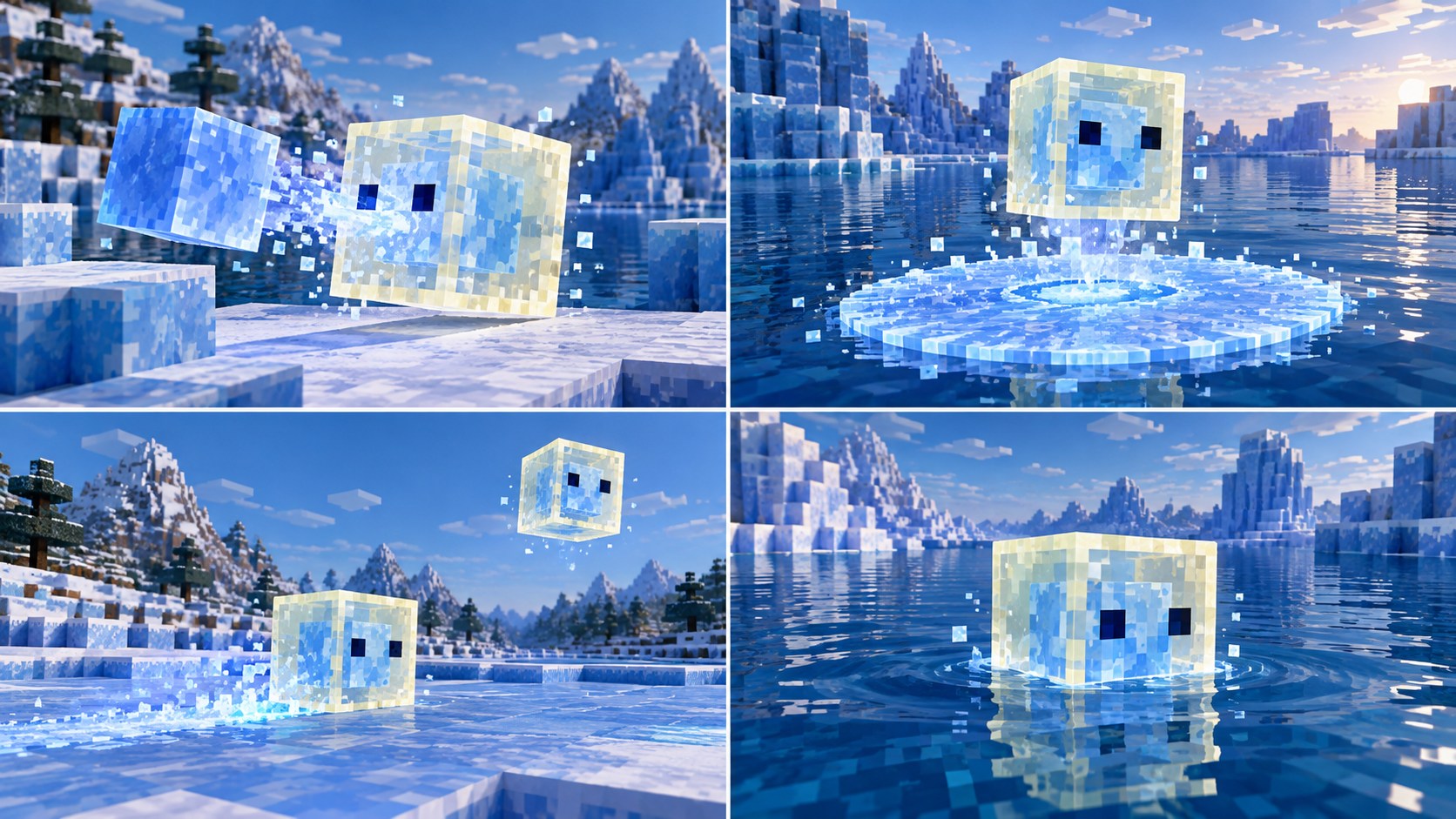
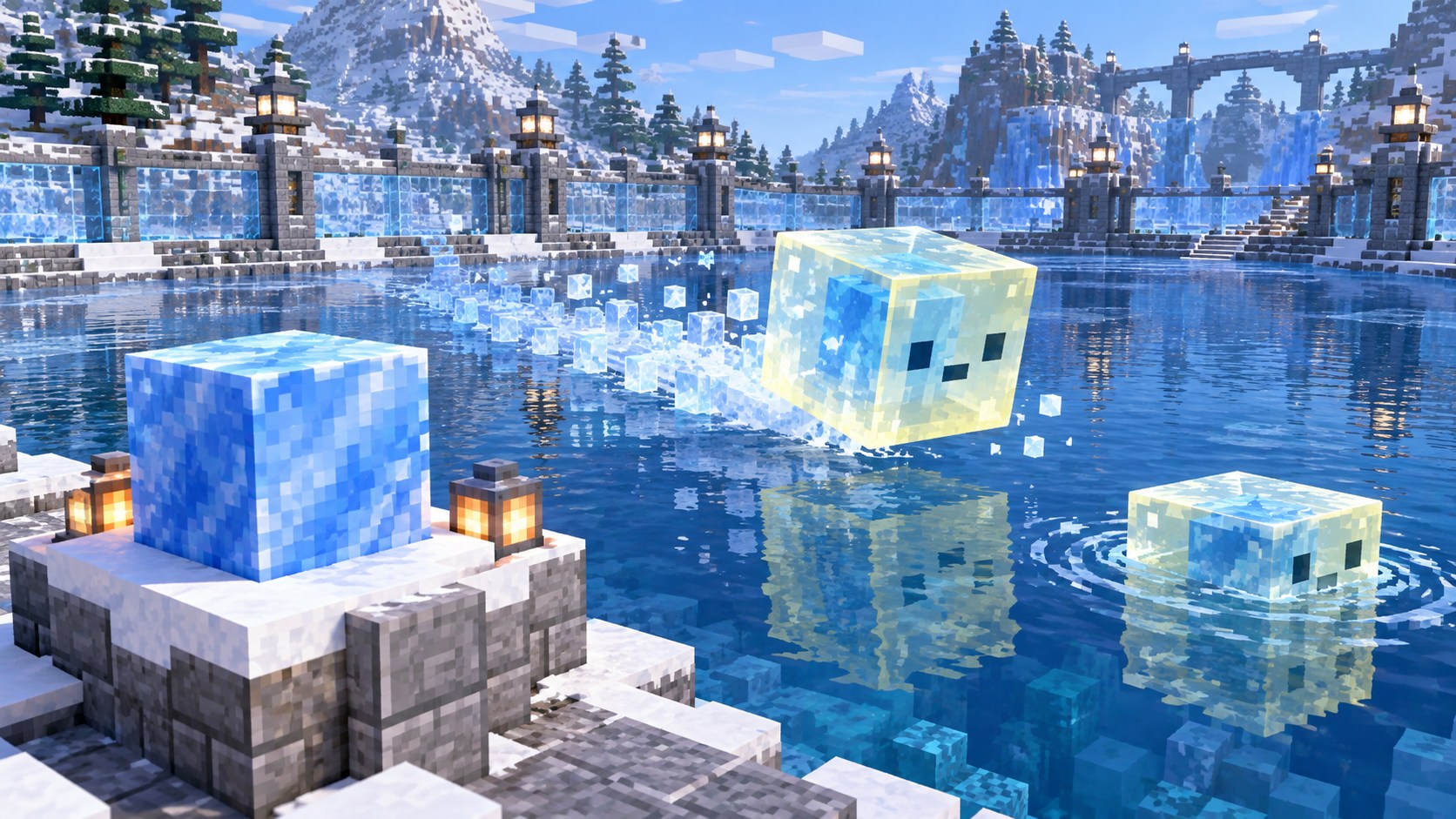
Image disclosure: every visual in this guide is an original editorial illustration based on the documented Snapshot 6 mechanics. The images use shader-enhanced Minecraft art direction but are not captured gameplay screenshots or independent proof.
Cold Sulfur Cube Verification Status
| Claim | Editorial status | Evidence required |
|---|---|---|
| Absorbs Blue Ice | Confirmed in official item tag | Owned-game absorption sequence |
| Floats and slides quickly | Confirmed in Snapshot 6 notes | Side-on movement capture |
| Creates Frosted Ice over water | Confirmed in official behavior data | Before-and-after overhead pool capture |
| Replacement radius is three blocks | Confirmed in official archetype JSON | Measured grid capture |
Cold Sulfur Cube at a Glance
| Property | Checked Snapshot 6 behavior |
|---|---|
| Food/absorbable block | Blue Ice |
| Movement | Buoyant and fast on sliding surfaces |
| Water effect | Replaces qualifying surface water with Frosted Ice |
| Radius | 3 blocks in official behavior data |
| Conditions | Starts on ground; water must have air above |
What Is a Cold Sulfur Cube?

A Cold Sulfur Cube is a cold-adapted member of the sulfur-cube family introduced during the 26.4 test cycle. Its design combines mob movement with terrain interaction: Blue Ice is the relevant absorbable block, the cube is buoyant, and its movement can temporarily convert a water surface into Frosted Ice.
That does not make it a reusable Frost Walker enchantment for every situation. The official behavior data applies predicates to the replacement: the cube must begin the action from the ground, the target is water, and the water needs air above it. Deep, covered, obstructed or incorrectly aligned test pools can therefore give a misleading failure.
Which Version Adds the Cold Sulfur Cube?
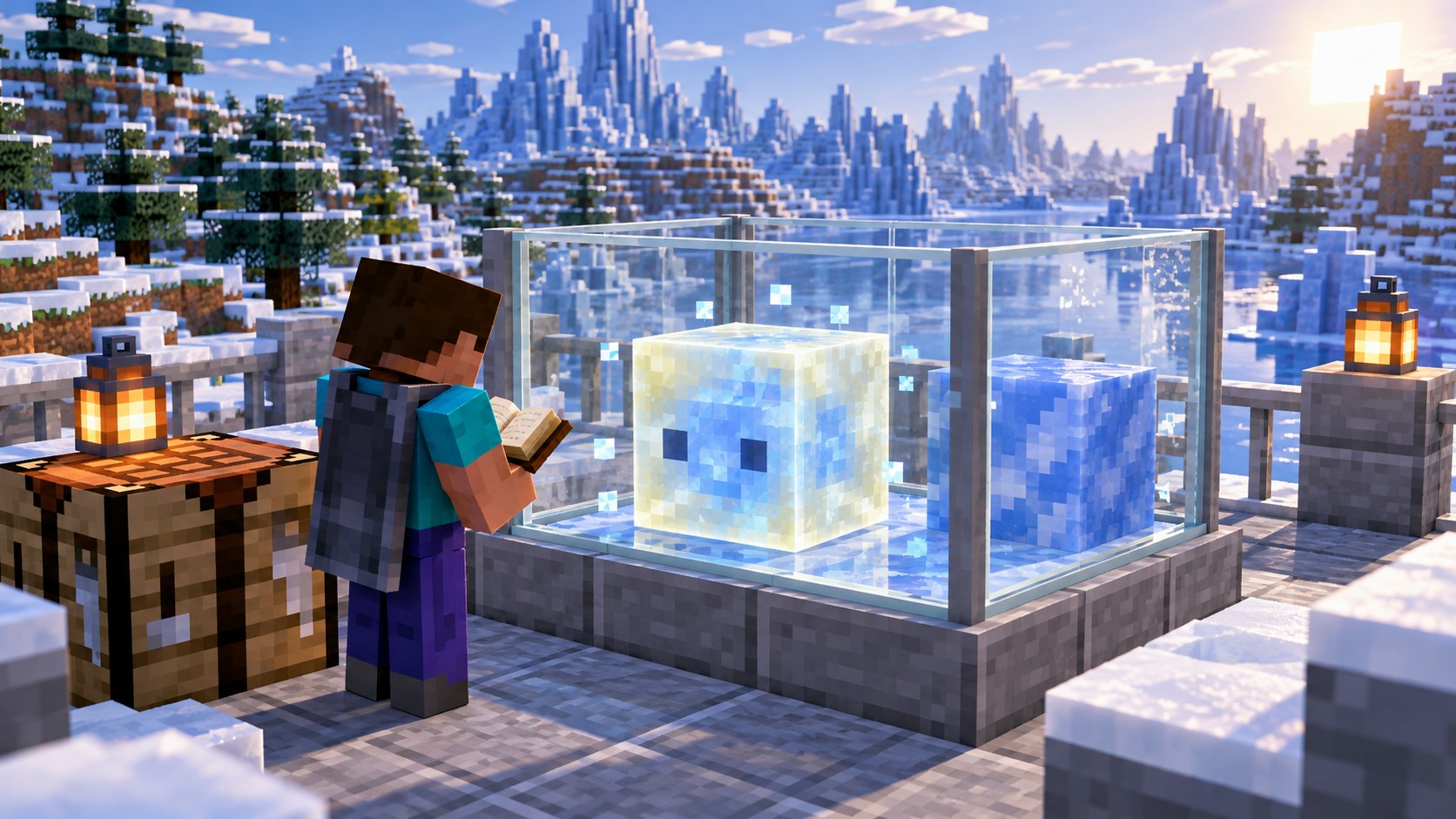
This guide is checked against Java 26.4 Snapshot 6. The latest stable Java release at the time of research is 26.3, so a normal 26.3 profile cannot be used to verify the mob. Servers must run a compatible build as well; a Snapshot client cannot add a new entity to an older server.
Use a separate test installation and back up worlds before opening them in a Snapshot. Development worlds can become incompatible or behave differently after later updates. The article’s evidence should keep the version text visible in at least one screenshot so readers can distinguish a real Snapshot 6 test from a modded imitation.
How Blue Ice Absorption Works
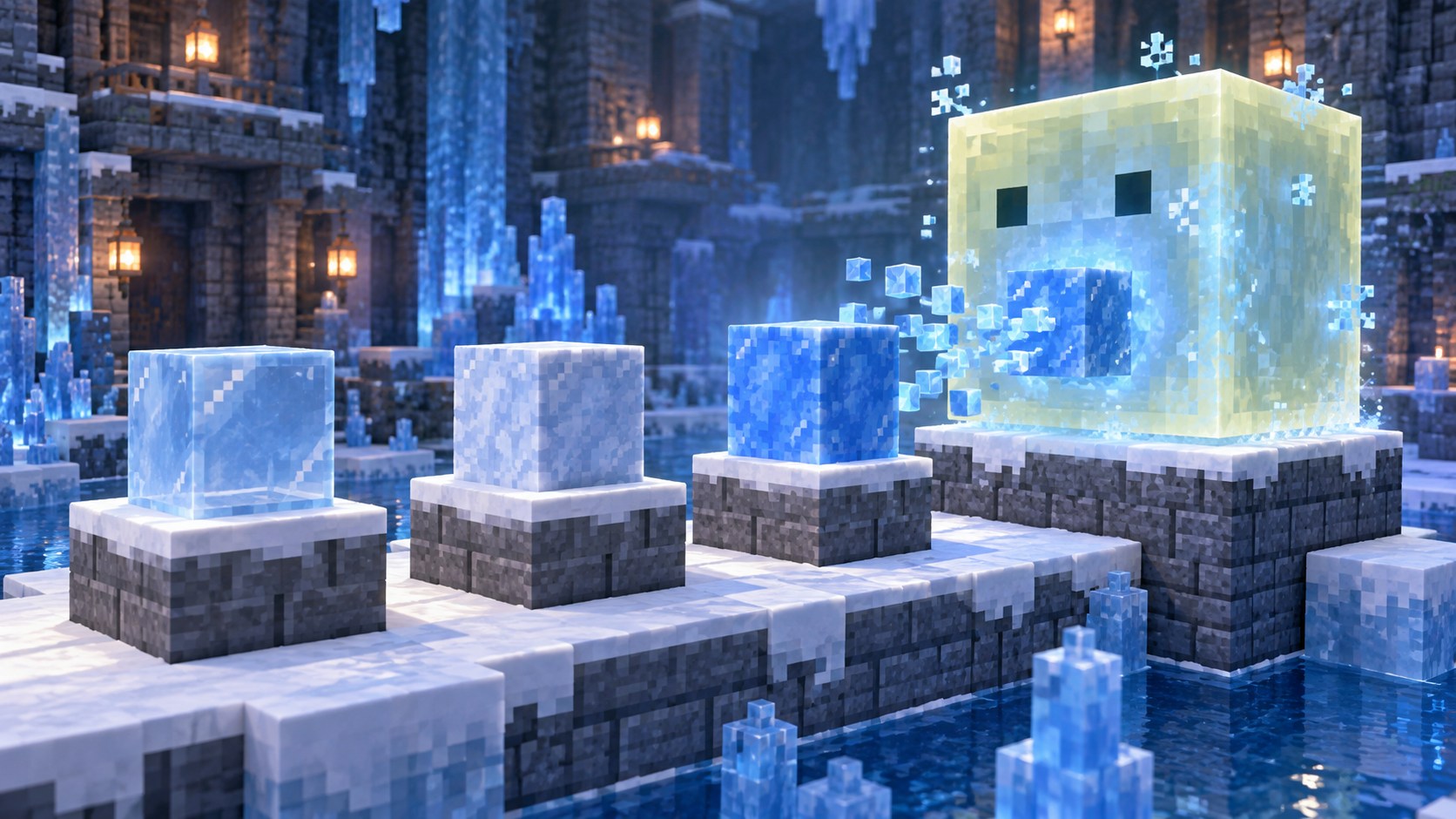
The official Snapshot 6 item tag for the Cold Sulfur Cube’s absorbable blocks contains Blue Ice. That is precise evidence: Packed Ice, ordinary Ice and Brittle Ice should not be presented as interchangeable food without a separate test. Place Blue Ice where the cube can contact it and observe the change in the entity or block state.
For a clean experiment, create four labeled lanes containing Blue Ice, Packed Ice, Ice and Brittle Ice. Release the same type of cube into each lane under identical conditions. A screenshot of the full comparison is stronger than a decorative scene because it shows the control blocks and the claimed successful input together.
How the Frosted-Ice Trail Works
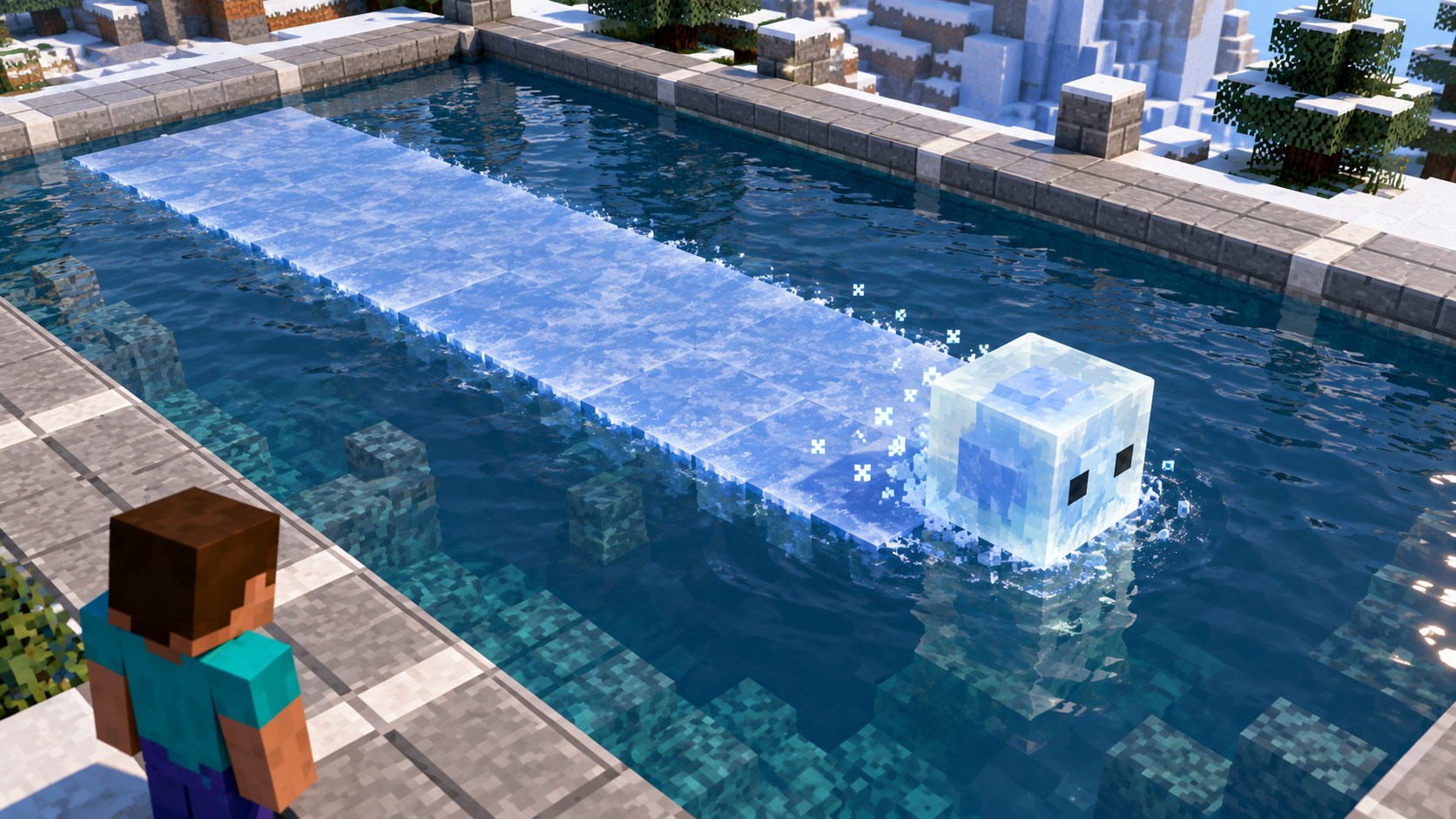
Snapshot 6 behavior data defines a replace-disk action with Frosted Ice as the replacement block and water as the target. The disk radius is three blocks. Water must have air above it, and the action requires the cube to be on the ground when the effect starts. These conditions explain why an apparently similar pool may not freeze.
Frosted Ice is temporary by design. It progresses through age states and can disappear, so the cube is not permanently converting an ocean into a build material. Capture the trail immediately, then capture the same area later to show that it is an effect rather than a renewable source of harvestable ice.
How to Build a Reliable Test Pool

- Create a flat platform at least nine blocks wide so the full three-block radius is visible.
- Place a one-block-deep water pool with an unobstructed air block over every surface tile.
- Add a solid launch edge so the cube begins on the ground.
- Place or summon the Cold Sulfur Cube using the Snapshot’s normal available method.
- Record an overhead before frame, the movement, and an after frame before the Frosted Ice ages away.
Avoid decorative kelp, slabs, waterlogged blocks or a roof during the first test. Once the minimal pool works, add complexity one variable at a time. This experiment-first method produces useful troubleshooting evidence and prevents a cinematic build from hiding the exact trigger condition.
Cold Sulfur Cube Movement and Buoyancy
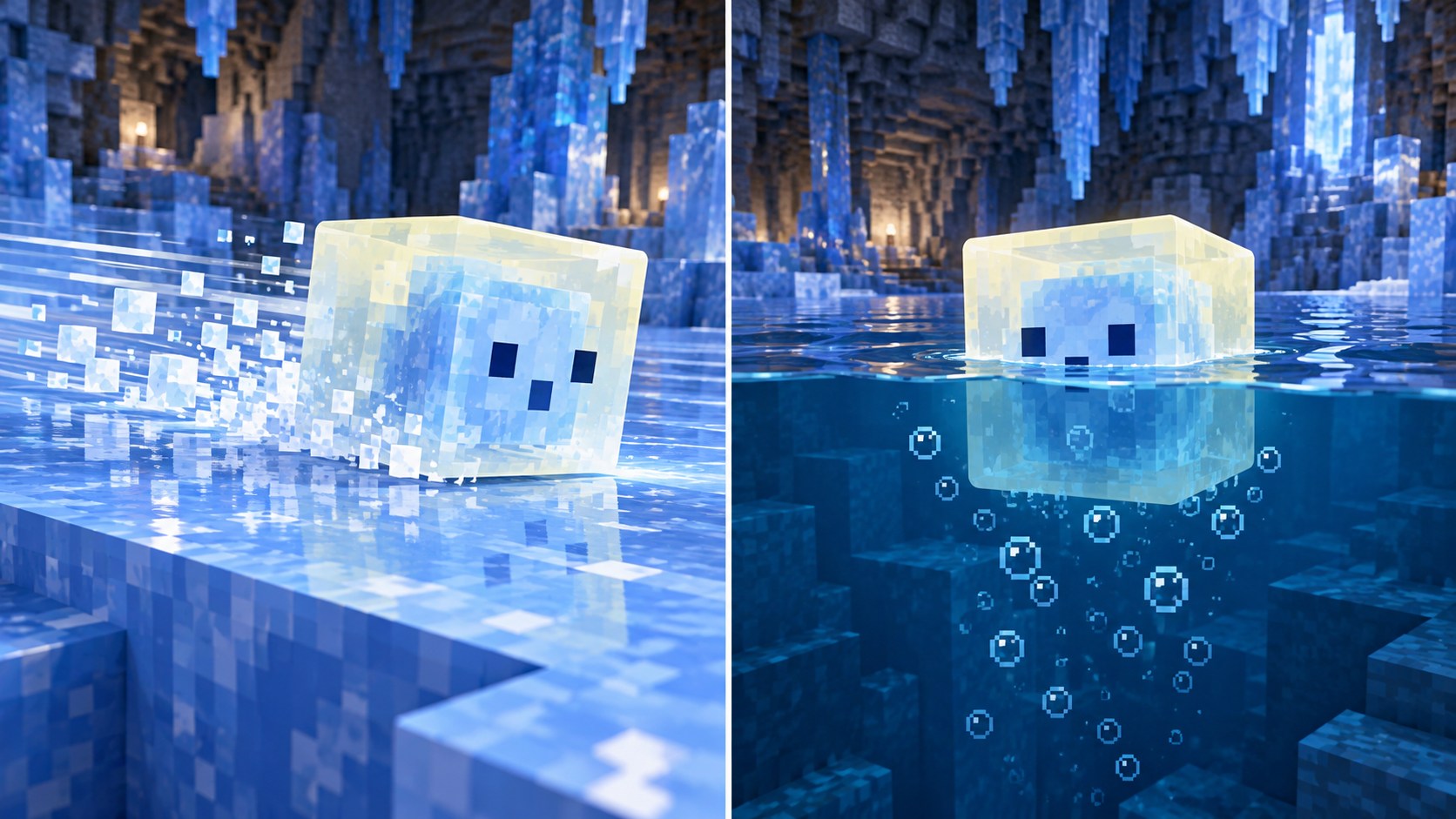
Mojang describes the cube as buoyant and fast when sliding. Buoyancy means water does not behave like a simple pit for the mob, while sliding surfaces amplify its movement character. The most authoritative image should therefore show motion direction and the surface, not only a static close-up.
Fast movement can make containment unreliable. Use walls outside the test radius, a long runway and a spectator or elevated camera position. Do not stand in the travel lane while collecting proof; a displaced camera can miss the short window in which the trail is freshest.
Can You Use the Cube for Water Travel?

The mechanic suggests a temporary bridge over qualifying water, but it should be treated as experimental mobility rather than a guaranteed transport system. The cube’s path, Frosted Ice aging and water geometry all affect whether a player can follow safely. Open oceans add currents, obstacles and unloaded chunks that a small test pool does not reproduce.
If you experiment in Survival, wear Frost Walker only if you are testing the combination deliberately; otherwise the player’s enchantment can contaminate the result. Bring a boat, blocks and a water-recovery plan. The goal is to learn the cube’s effect, not to confuse player-created Frosted Ice with entity-created Frosted Ice.
What the Cold Sulfur Cube Does Not Prove
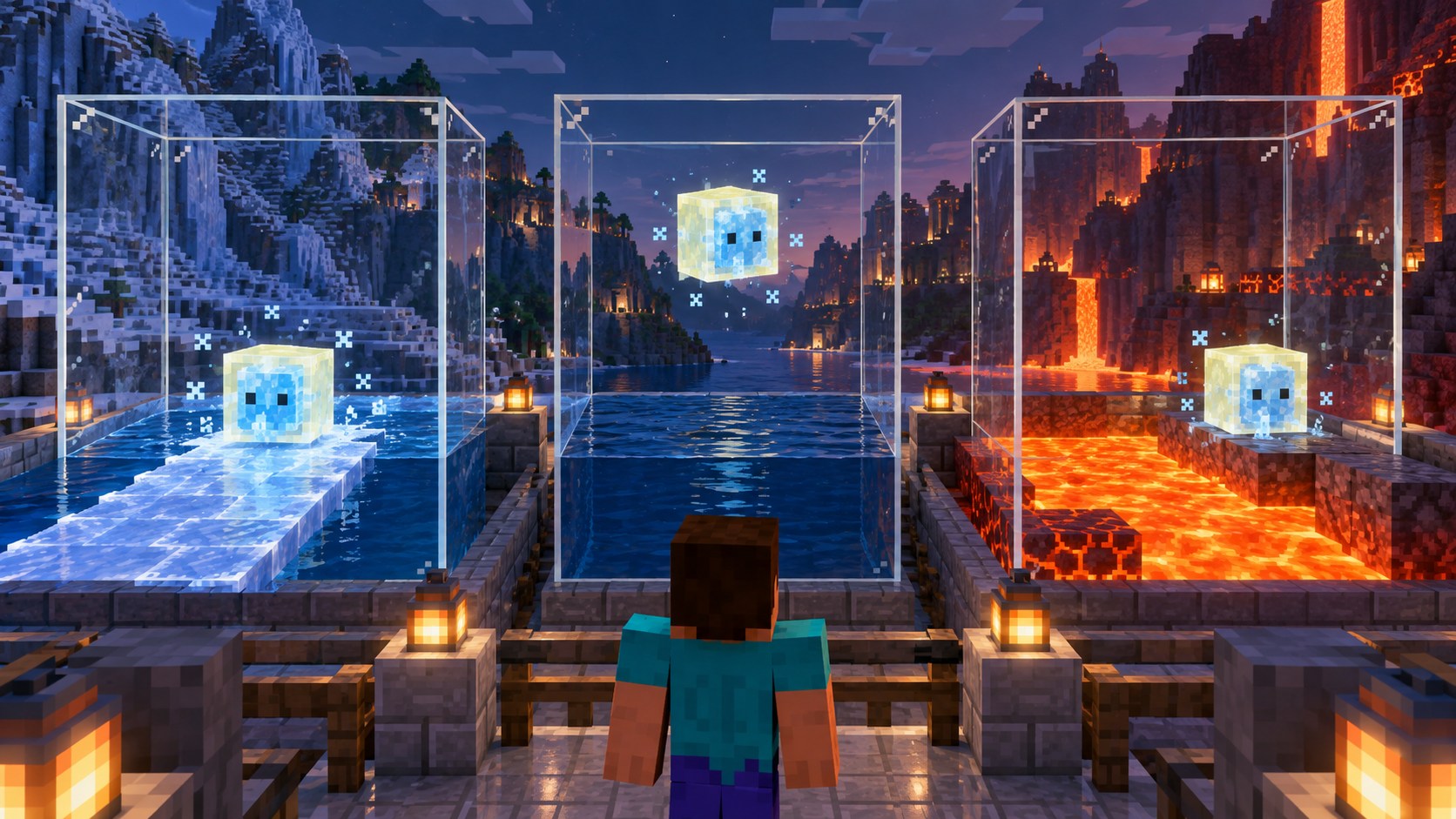
- A single frozen tile does not prove the full radius.
- A decorative Blue Ice scene does not prove absorption.
- Frost Walker boots can produce the same block type and invalidate the test.
- A command-spawned cube proves behavior but not natural spawning or survival acquisition.
- Snapshot 6 results do not automatically prove final 26.4 behavior.
GamerCubic should label command-assisted test setups honestly. Commands are appropriate for isolating a mechanic, but the article must not use that capture as evidence for a natural location, drop chance or survival route that was not actually observed.
Best Uses for the Mechanic
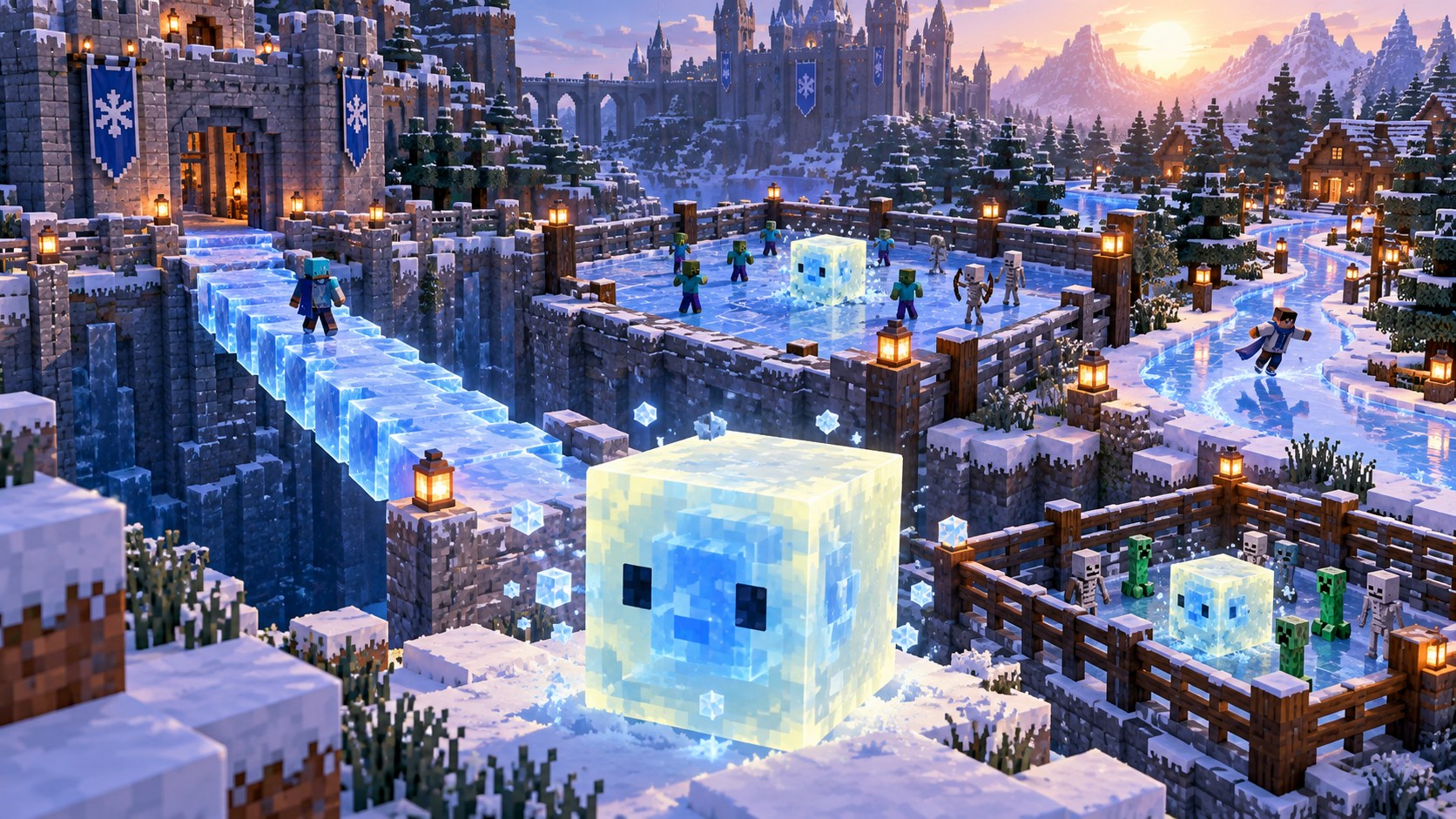
- Redstone-free visual trails: a temporary moving effect for ice-themed maps.
- Controlled water crossings: short experimental bridges over shallow pools.
- Mob laboratories: comparing block predicates and movement surfaces.
- Adventure maps: timed paths where Frosted Ice decay is part of the challenge.
- Version showcases: a compact demonstration of Snapshot 6 behavior.
Build around the temporary nature of Frosted Ice. A good showcase has a reset path and an observer-safe camera angle. A permanent base entrance should not depend on an experimental mob whose path can change in later Snapshots.
Edition, Version and Server Boundaries
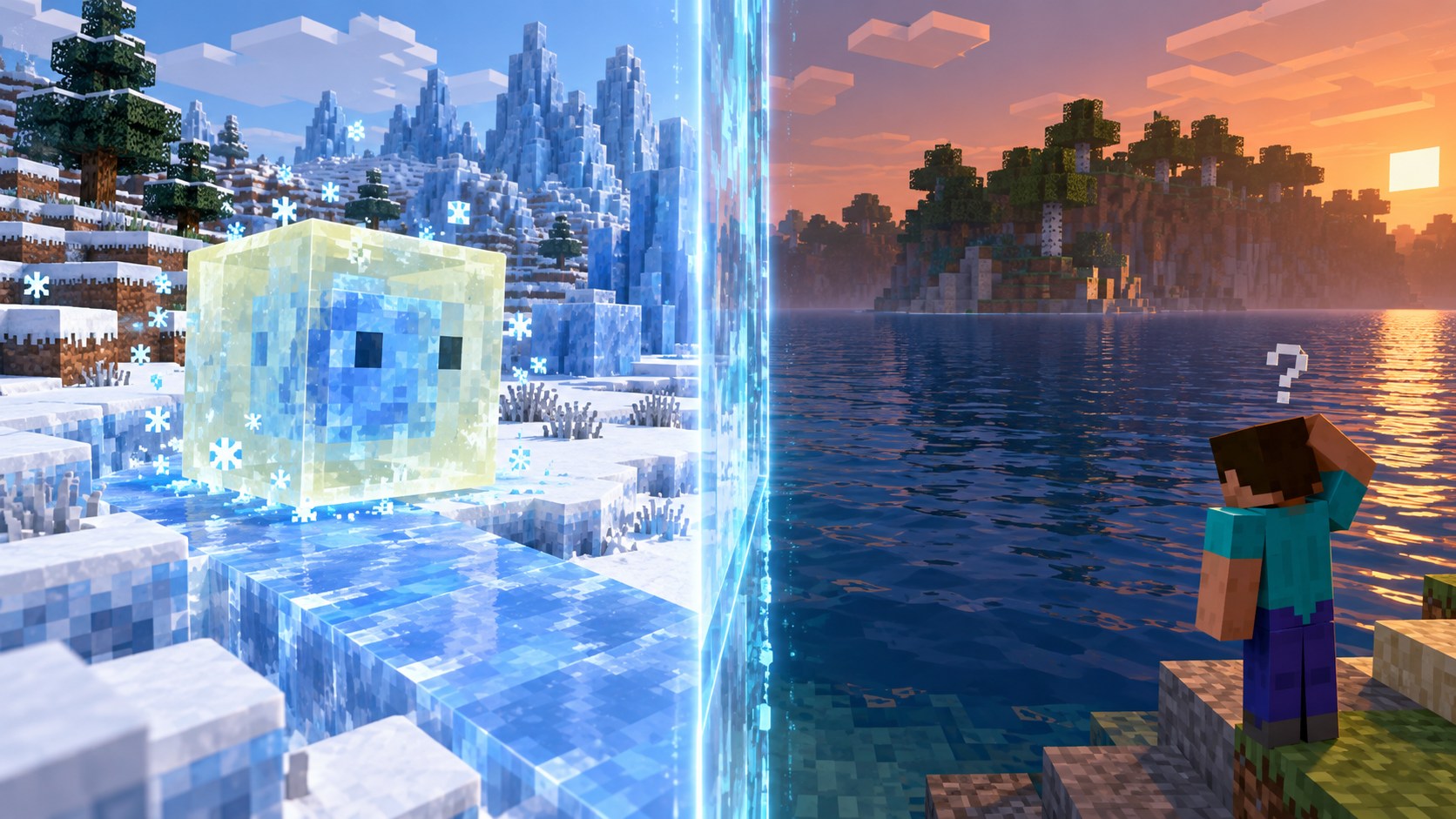
This guide is scoped to Java 26.4 Snapshot 6; feature is in development. A similar name in another edition, an older release, a Preview, a mod or a server plugin is not automatic proof of the same behavior. Before troubleshooting, compare the title-screen version, the world or server version and the exact item, block, entity or command namespace.
On multiplayer, the server controls registries, recipes, commands and most game logic. A newer client cannot add a Snapshot feature to an older server. Conversely, a modded server can make a result appear in a version where vanilla does not contain it. Final captions must say whether the test is vanilla, command-assisted or modded and must never hide that distinction.
What Counts as Valid In-Game Proof?
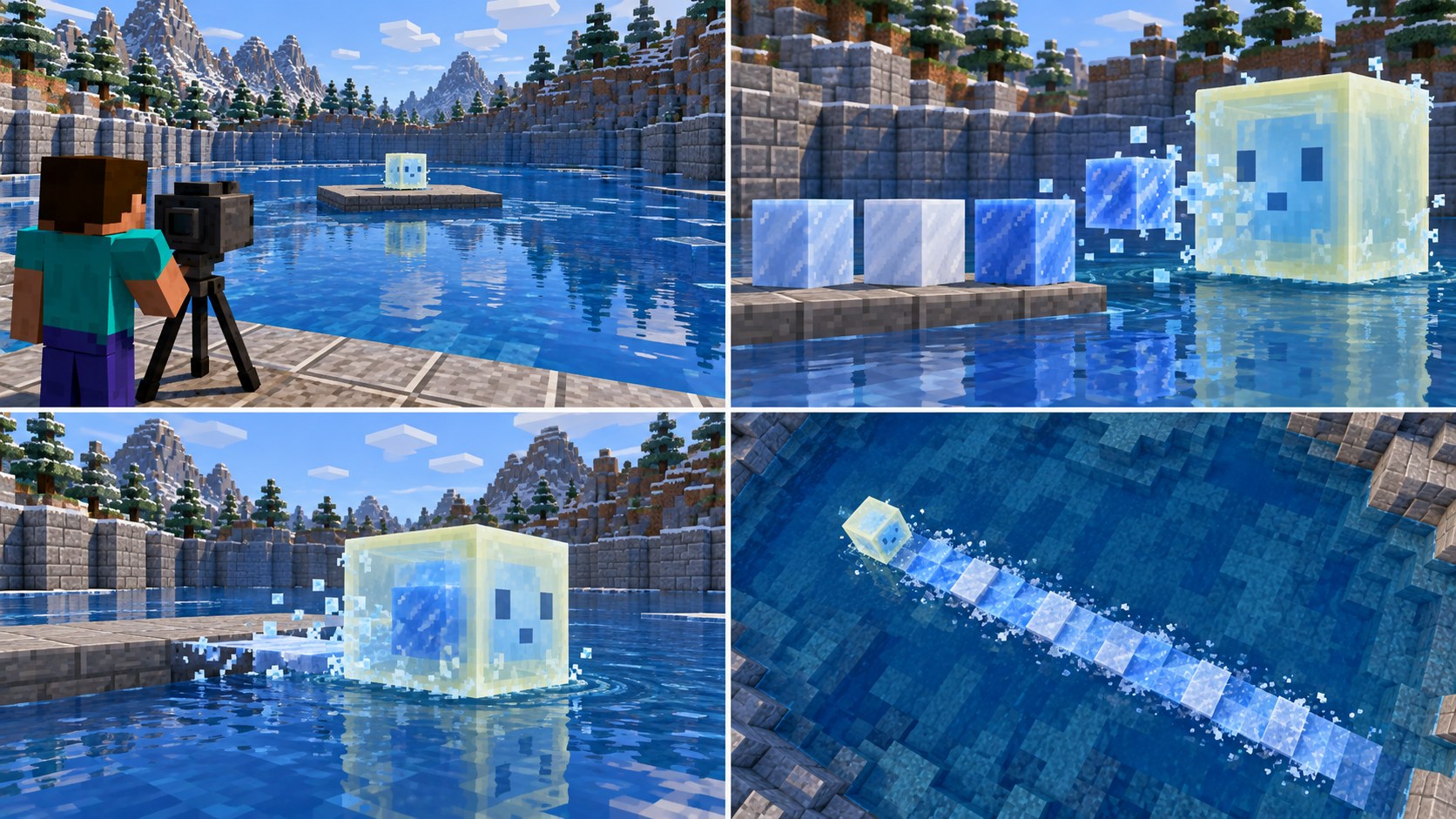
A valid proof image connects a claim to a visible result under controlled conditions. It shows the relevant game version or records it in the evidence ledger, keeps the important UI or item name readable, and includes a comparison when another mechanic could create the same appearance. The raw capture is retained before cropping and compression.
- Recipe claim: show ingredients, grid layout and output at the same time.
- Drop claim: use Survival rules and show the tool plus resulting item.
- Behavior claim: include a control where the trigger is absent or different.
- Location claim: show environmental context, coordinates and biome/version data where possible.
- Command claim: show the full command, parser output and resulting inventory or world state.
- Performance claim: record a timed sample and repeat it instead of using one favorable frame.
AI-generated scenery, a promotional render or another site’s screenshot can illustrate a concept, but none proves that GamerCubic reproduced it. Every generated image in this guide is therefore labeled as an editorial illustration, while the factual claims are tied to the cited Mojang documentation and checked client data.
Pre-Publication Test Checklist
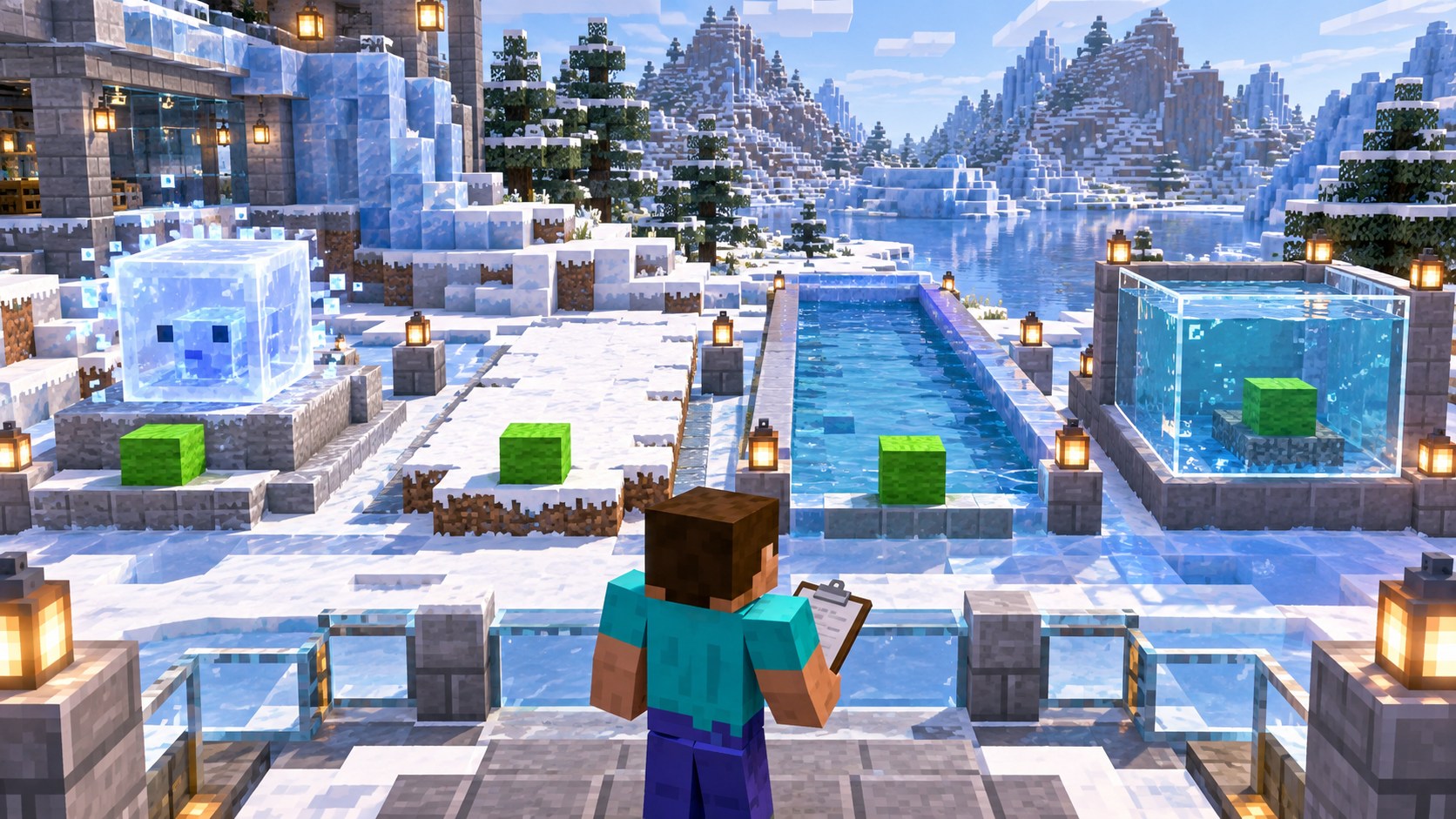
- Recheck the newest Mojang release or Snapshot notes for changes after the research date.
- Repeat the core action twice in a fresh vanilla test world.
- Record the exact version, edition, world mode and any command assistance.
- Capture a wide context frame and a close proof frame at native resolution.
- Verify every number, item ID, recipe output and tooltip against the capture or official data.
- Test all internal and external links and remove any unsupported claim.
- Inspect the local preview on desktop and a narrow mobile viewport.
- Run the package validator only after real JPEG files, dimensions, hashes, captions and QA scores are complete.
The source check is complete for Snapshot 6, but that is not the same as reproducing every result in an owned gameplay session. The status table at the top keeps “officially documented” separate from “personally reproduced.”
Why Isn’t the Cold Sulfur Cube’s Ice Trail Working?

- Wrong build: use Java 26.4 Snapshot 6 or a later version that still documents the mob.
- The cube did not begin on ground: add a solid launch block at water level.
- The water is covered: every target tile needs air above it.
- The target is not plain water: waterlogged or obstructed blocks may not satisfy the predicate.
- Frost Walker contaminated the test: remove enchanted boots and repeat.
- You expected permanent ice: Frosted Ice ages and disappears.
Reset to a one-block-deep, uncovered square pool beside a solid runway. If that minimal layout works, restore depth, decoration and obstacles one at a time until the failing condition becomes visible.
Frequently Asked Questions

What does a Cold Sulfur Cube absorb?
Blue Ice is the absorbable block listed in the checked Snapshot 6 item tag.
How large is its freezing radius?
The official Snapshot 6 behavior data specifies a three-block disk radius.
Does it make permanent ice?
It creates Frosted Ice, which is temporary rather than a permanent harvestable conversion.
Why does covered water not freeze?
The target predicate requires air above the water.
Is it in stable 26.3?
No. This guide is for the 26.4 Snapshot cycle.
Can a screenshot prove natural spawning?
Only if the capture records the natural location and context; a command test proves behavior, not spawn rules.
Sources and Verification Method

This guide prioritizes primary documentation: Minecraft 26.4 Snapshot 6. The official client entity archetype and item-tag JSON were inspected to verify the Blue Ice input, Frosted Ice replacement, radius and environmental predicates. Any screenshot labeled as proof must come from GamerCubic’s owned game session; generated artwork and third-party screenshots are not accepted as verification.
Continue Exploring Cold Sulfur Cube

Use the related GamerCubic resources to keep the next step practical: Minecraft Mobs guides Frostbite guide
Final Verdict

The Cold Sulfur Cube is best understood as a conditional moving Frosted-Ice generator, not a permanent ice farm. The source behavior is checked, including the three-block radius and air-above-water requirement. The illustrations explain those documented rules without claiming an owned gameplay reproduction; recheck the mechanic when Mojang publishes a later Snapshot or the final 26.4 release.
Continue Exploring
Minecraft Summon Command Examples
Practical Minecraft summon command examples for Java: summon mobs, choose coordinates, fix common errors, and understand Java versus Bedrock limits.
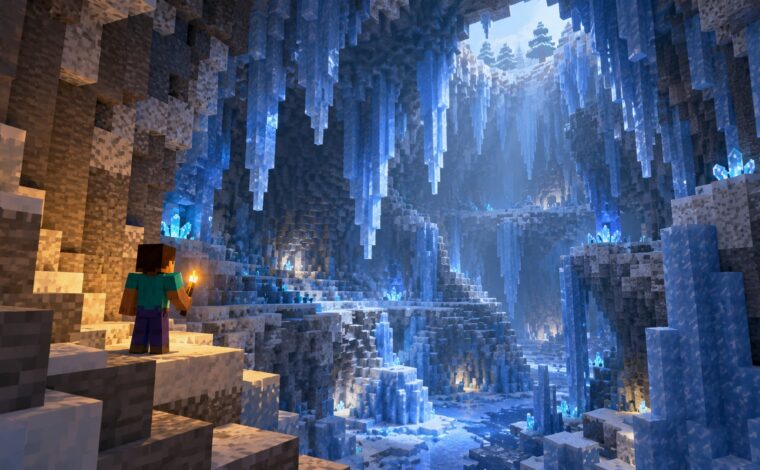
How to Find Ice Caves in Minecraft 26.4 (Location, Y-Level & New Features)
Find Ice Caves beneath colder Overworld biomes in Minecraft 26.4 test builds. This guide covers location clues, the unknown Y-level, Ice Crystals, Frostbites, and safe exploration.

Minecraft Frostbite Guide (26.4): How to Find It, Convert Zombies & Get Ice Balls
Find Frostbites, convert Zombies and Husks with Powder Snow, collect Ice Balls and master Freezing in Minecraft 26.4 test builds.